Two of the most misunderstood dogs in America, and somehow you’ve landed on the one comparison that people have the strongest opinions about. Ask five dog owners which is better between a German Shepherd and a Pitbull, and you’ll get seven different answers, usually delivered with great passion.
Here’s the thing, though: this isn’t really a contest. Both breeds are loyal, intelligent, and deeply loving with the right family. Both carry reputations that often say more about bad owners than bad dogs. And both can thrive as family companions or struggle, depending almost entirely on the environment you give them.
So instead of handing you a winner, this German Shepherd vs Pitbull guide is going to help you figure out which dog fits your life. Your home, your routine, your kids, your experience level. By the end, you’ll have a clear sense of which breed is calling your name and what you’re actually signing up for.
Let’s get into it.
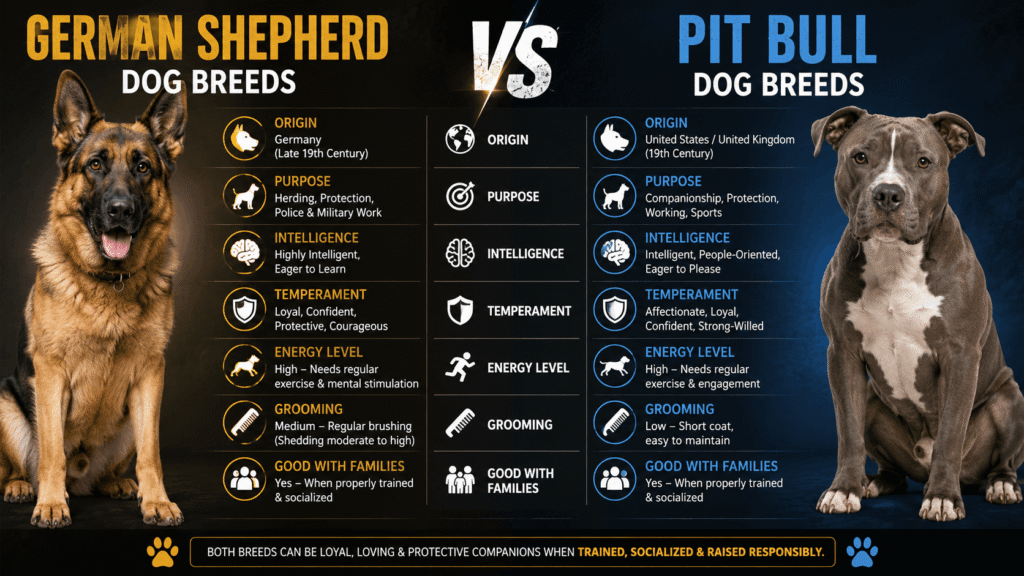
Quick Comparison: German Shepherd vs Pitbull at a Glance
| Feature | German Shepherd | Pitbull |
|---|---|---|
| Size | Large (50-90 lbs) | Medium (30-65 lbs) |
| Temperament | Loyal, alert, reserved with strangers | Affectionate, social, people-loving |
| Trainability | Very High | High (occasionally stubborn) |
| Family Friendliness | Excellent with kids they know | Excellent with kids, very gentle |
| Guard Dog Ability | Strong natural protector | Alert, but more of a greeter |
| Exercise Needs | High (2+ hours/day) | High (60-90 mins/day) |
| Grooming | Moderate–High (heavy shedder) | Low maintenance |
| Lifespan | 9-13 years | 10-14 years |
Temperament & Personality – What Are They Really Like?
Before anything else, let’s talk about what these dogs are actually like to live with. Not the headlines. Not the stereotypes. The real day-to-day personality.
The German Shepherd Personality

If the German Shepherd had a LinkedIn profile, it would say: “Dedicated professional. Loyal to a fault. Not interested in small talk with strangers, but fiercely devoted to the people who matter.”
According to the AKC’s breed profile, German Shepherds are described as courageous, confident, and smart – and those three words really do sum them up. They’re alert without being skittish, protective without being erratic, and affectionate without being clingy. They tend to form a particularly close bond with one person while still loving the whole family.
The “reserved with strangers” trait is important to understand. Your GSD isn’t being unfriendly when they give the new neighbor a long, careful look. They’re doing what they were literally bred to do – assess, evaluate, protect. Once a GSD decides someone is safe, they warm up relatively quickly. But that initial guardedness is just part of who they are.
One thing that catches first-time GSD owners off guard: these dogs need a job. Mental stimulation isn’t optional. Many German Shepherd owners notice that a bored GSD is a creative GSD – creative in ways that tend to involve your furniture.
The Pitbull Personality
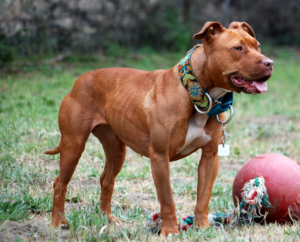
Now picture the opposite approach to meeting strangers. The Pitbull’s default setting is: “Oh! A person! I love people. You’re my new best friend. Have you met my family? Do you want to come in? Let me show you around.”
Pitbulls are social, enthusiastic, and genuinely people-obsessed. They’re also remarkably sensitive – they pick up on your mood, mirror your energy, and are deeply motivated by your approval. The DogTime breed profile notes that Pitbulls love people and have absolutely no idea their size might be a deterrent to being a lap dog. Confident and keenly aware of their surroundings, they’re watchdogs in that they may alert you to a stranger’s presence – primarily because they’re eager to greet them.
One dog trainer put it this way: Pitbulls want to make you happy – but only once they’ve decided you’re worth listening to. Building that relationship through consistent, positive training is the key that unlocks everything.
Are Either of These Breeds Actually Aggressive?
Let’s address this head-on, because it comes up in every comparison and deserves a real answer.
Any dog can be aggressive. Any. The factors that reliably predict aggression are a history of abuse or neglect, lack of socialization, and irresponsible ownership – none of which are breed-specific.
The ASPCA’s official position on Pitbulls is clear: these dogs have long been popular family pets, noted for their gentleness and loyalty. Even dogs historically bred for other purposes were not prone to aggression toward people. The American Temperament Test Society – which has been running standardized behavioral evaluations since 1977 – has found that Pitbull-type dogs pass at rates comparable to Golden Retrievers and other breeds typically considered the gold standard of family dogs.
German Shepherds can show territorial behavior if not properly socialized, particularly with strangers and other dogs. This is their working instinct in overdrive – not a character flaw, but a trait that needs proper channeling through early exposure and consistent training.
Both breeds need early socialization, consistent training, and an owner who understands what they’re working with. Do those things and you’ll have a wonderful dog. Skip them and you’ll have problems – regardless of breed.
Best for German Shepherds: Owners who want a dog that is naturally alert and protective, bonds deeply with family, and appreciates having a purpose.
Best for Pitbulls: Owners who want a social, affectionate companion who loves everyone and thrives on human connection.
Trainability & Intelligence – Which Is Easier to Train?
Both breeds are trainable. Both want to please you. But they get there differently, and understanding that distinction saves a lot of frustration.
Training a German Shepherd
German Shepherds are widely considered one of the most trainable dog breeds in the world – and they know it. These dogs serve in police work, military operations, search and rescue, and disability assistance because they can learn complex commands quickly, retain them reliably, and perform under pressure.
The AKC notes that GSDs are eager to please but need an outlet for their instincts and mental energy. Training a GSD isn’t just about teaching “sit” and “stay” – it’s about giving them a structured outlet for their intelligence. Obedience classes, agility, nose work, trick training: any of these will make your GSD a happier, more settled dog at home.
Starting with the fundamentals of dog training early is especially important with German Shepherds. They absorb everything in their environment – good habits and bad ones equally.
Training a Pitbull
Pitbulls are enthusiastic training partners once you’ve established a relationship. They’re people-pleasers by nature, which means positive reinforcement works beautifully with them. Praise, play, and treats? They’re absolutely in.
The catch is that early on, Pitbulls can be selectively stubborn – not out of defiance, but because they’re still figuring out whether you’re worth following. Once they’ve bonded with you and decided you’re their person, that loyalty becomes a training superpower. Short, engaging sessions with clear rewards consistently outperform long, repetitive drills.
Which Is Better for a First-Time Owner?
Both breeds are genuinely achievable for first-time owners who go in prepared – but they demand different things from you.
A German Shepherd needs structure, consistency, and daily mental stimulation. If you’re willing to invest in training classes and give them a job to do, they’ll reward you tenfold. A Pitbull needs patience in the early socialization phase and a commitment to positive reinforcement from the start. They’re forgiving of beginner mistakes, but they do need firm, kind leadership.
Neither breed is a “plug and play” dog. Both need an engaged owner who shows up every day. The good news is that knowing how to socialize a dog from puppyhood makes an enormous difference for both breeds – and it’s simpler than most people think.
Best for German Shepherds: Owners who enjoy active training, want a highly responsive dog, and are ready to challenge them mentally every day.
Best for Pitbulls: Owners who are patient, relationship-focused, and happy to use positive reinforcement as the foundation of everything.
Family Life – How Do They Do With Kids and Other Pets?
This is the question that matters most for families. Here’s the honest, breed-by-breed answer.
German Shepherds With Children
German Shepherds are wonderful family dogs – loyal, gentle, and instinctively protective of the children they grow up with. They do tend to be cautious with new children (strangers are strangers, even small ones), so early socialization with kids of all ages is important.
Their size and energy level is worth considering with toddlers. A young, enthusiastic GSD playing freely can knock a small child over without any bad intention. Supervision with very young kids isn’t about distrust – it’s just practical common sense with a large, energetic dog who doesn’t always know their own size.
As your kids grow, the GSD grows with them. Many families describe their GSD as the silent guardian of the household – always aware of where the children are, always somewhere nearby.
Pitbulls With Children
Pitbulls have historically earned the nickname “nanny dogs” – and it’s not entirely without basis. Well-socialized Pitbulls tend to be remarkably patient and gentle with children. Their high pain tolerance means they handle the rough-and-tumble play of kids without overreacting, and their affectionate nature makes them naturally drawn to the people who give them the most attention (which, in most families, is the kids).
One Pitbull owner with three children under age 10 described her dog as “basically a giant stuffed animal that breathes” – lying perfectly still while toddlers climbed on her, tail wagging throughout. That patience isn’t magic. It’s the product of proper socialization and a stable, well-cared-for temperament.
There’s also the story of Duke – a Pitbull who went on to pass his Canine Good Citizen certification and become a certified therapy dog visiting hospital patients. The most common reaction from people he met? Genuine surprise at how gentle and calm he was. That’s the reality of a well-raised Pittie.
What About Other Dogs and Pets?
Both breeds can coexist peacefully with other animals – but both need thoughtful introductions and consistent management.
German Shepherds can be territorial with other dogs, especially of the same sex. Early socialization with other dogs matters a great deal here. Pitbulls may show dog-directed reactivity – a tendency to be selective or reactive around other dogs. Importantly, this is a separate trait from human aggression and the two are not linked. It’s manageable with proper introductions and training, but it’s worth knowing about upfront.
Neither breed is automatically cat-compatible, so careful, supervised introductions are always recommended regardless of which breed you choose.
The best dogs for families share one consistent trait: they were socialized thoughtfully as puppies and raised with clear, loving boundaries.
Best for German Shepherds: Families with older kids who want a devoted protector and don’t mind a dog who takes time to warm up to new people.
Best for Pitbulls: Families with children of any age who want a social, warm, affectionate companion – and who are prepared to manage dog-to-dog interactions thoughtfully.
German Shepherd vs Pitbull: Guard Dog & Protection
If protection is part of what you’re looking for, these two breeds take very different approaches – and it’s worth being clear-eyed about that difference.
The German Shepherd as a Protector
The GSD’s protective instinct is genuine, consistent, and deeply ingrained. Many German Shepherd owners notice their dog naturally positions itself between the family and unfamiliar people – not aggressively, just deliberately, like a quiet statement of intent. It’s the breed doing exactly what it was developed for.
German Shepherds are used in law enforcement and military roles worldwide because their protective instinct is paired with trainable judgment – they can be taught when to act and when to stand down. In a family home, that same quality translates to a dog that is vigilant without being paranoid and protective without being a liability.
If you want a fuller breakdown of what makes a great protection dog, our guide to the best guard dog breeds covers exactly that.
The Pitbull as a Watchdog
Here’s the honest truth about Pitbulls and protection: their default setting is friendliness, not wariness. A Pitbull will typically alert you when someone’s at the door – and then immediately try to greet them. Their physically imposing appearance may deter some intruders more than their actual temperament would.
That said, a Pitbull who perceives a genuine threat to their family is a different story. Their loyalty and devotion to the people they love is fierce, and they will act on it when it matters. They’re just not natural guard dogs in the way a GSD is built to be.
Best for German Shepherds: Anyone who wants a natural protector with reliable working instincts and a vigilant presence.
Best for Pitbulls: Anyone who wants a loyal companion and is fine with a dog whose first instinct toward strangers is enthusiasm rather than caution.
Exercise, Grooming & Cost of Ownership
Before you fall in love with either breed, it helps to know exactly what you’re committing to on a daily basis.
Exercise Needs Side by Side
Both breeds are active, athletic dogs that need real exercise – not just a leisurely stroll around the block.
German Shepherds need at least two hours of physical activity daily, alongside mental stimulation. A GSD that gets walks but no mental engagement will find its own entertainment – usually at the expense of your belongings. Think obedience work, fetch sessions, puzzle feeders, or agility practice to round out their day.
Pitbulls need 60–90 minutes of vigorous activity per day. They’re muscular, energetic, and built to move. A well-exercised Pittie is a well-behaved Pittie. An under-exercised one is a bored one – and a bored Pittie is not your furniture’s best friend.
Grooming Requirements
This is where things get noticeably different between the two.
German Shepherd: The “German Shedder” nickname is absolutely earned. Their dense double coat sheds year-round and blows out heavily twice a year. You’ll need regular brushing (at least two to three times per week), and during shedding season, daily brushing becomes a real consideration. A quality vacuum and a lint roller collection become household staples.
Pitbull: Short, smooth coat that requires almost no upkeep. A quick weekly brush-through and the occasional bath is about all they need. If grooming time and pet hair are factors in your decision, the Pitbull wins this category by a wide margin.
What Does Ownership Actually Cost?
Costs vary by location and individual circumstances, but here’s a realistic first-year snapshot for comparison:
| Expense | German Shepherd | Pitbull |
|---|---|---|
| Purchase / Adoption | $500–$2,500+ | $50–$500 (adoption common) |
| Food (annual) | $600–$1,000 | $400–$700 |
| Grooming (annual) | $300–$600 | $100–$200 |
| Training classes | $200–$600 | $200–$600 |
| Routine + emergency vet | $500–$1,500 | $400–$1,200 |
| Pet insurance (monthly) | $40–$80 | $50–$100* |
*Pitbulls can face higher insurance premiums due to breed discrimination policies from some providers – even though their actual health profile tends to be strong overall.
Health – What to Expect Over Their Lifetimes
Every breed comes with health tendencies worth knowing upfront. No surprises is always better than unpleasant ones.
German Shepherd health: GSDs are prone to hip and elbow dysplasia. According to data from the Orthopedic Foundation for Animals, roughly 1 in 5 German Shepherds show some degree of hip dysplasia – making it one of the most important health considerations for prospective GSD owners. Degenerative myelopathy, a progressive spinal condition, is also a known concern in older dogs. Bloat (gastric dilatation-volvulus) is another risk given their deep chest. Regular vet checkups, maintaining a healthy weight, and avoiding high-impact exercise in growing puppies all help manage these risks. Lifespan: 9-13 years.
Pitbull health: Pitbulls are generally considered a hardy breed. Skin allergies are the most common issue owners deal with – ranging from mild seasonal reactions to chronic conditions that benefit from dietary adjustments. Some lines carry predispositions to hip dysplasia and heart conditions, so routine vet checkups remain important. But overall, Pitbulls tend to have fewer serious breed-specific health concerns than German Shepherds. Lifespan: 10–14 years.
Frequently Asked Questions
Are German Shepherds More Protective Than Pitbulls?
Yes – in terms of natural protective instinct, German Shepherds have a clear edge. Their wariness around strangers and territorial awareness are deeply ingrained traits that come from a working breed history built around guarding and protecting. They were literally developed to watch over livestock and have served in protection roles for over a century.
Pitbulls can absolutely be protective of their families when a genuine threat is present. But their default is social and friendly rather than guarded. A GSD’s calm presence communicates “this home is watched.” A Pitbull’s presence communicates “welcome, new friend.” Both are loyal – they just express it differently.
If protection is a primary motivation for getting a dog, the German Shepherd is the more natural and reliable fit.
Which Breed Is Easier to Train?
For structured, command-based training, the German Shepherd has a slight edge. Their intelligence is exceptional, their focus is strong, and they genuinely love having a clear job to do. They’re among the breeds most commonly used in professional working roles precisely because of how responsive they are.
Pitbulls are also highly trainable – but the process relies more heavily on relationship-building first. Once a Pitbull has bonded with you, they can be remarkably consistent and reliable. The early investment in trust pays off enormously down the road. Short, positive, reward-based sessions work far better than long, repetitive drills for this breed.
Both breeds benefit enormously from starting training young and staying consistent. Getting a solid handle on the basics of dog training early is one of the best investments you can make with either breed.
Do Pitbulls Get Along With Families and Kids?
Absolutely – and the evidence strongly supports it. The ASPCA notes that Pitbulls have long been popular family pets, known for their gentleness, affection, and loyalty. The American Temperament Test Society consistently finds that Pitbull-type dogs pass behavioral evaluations at rates comparable to Golden Retrievers and other breeds typically considered ideal family dogs.
The key, as with any dog, is early socialization and responsible ownership. A Pitbull raised with children, exposed to varied people and environments from puppyhood, and given consistent positive training is typically a wonderful family companion – patient, affectionate, and loyal to the core.
The reputation doesn’t match the reality for well-raised dogs. That story about Duke the therapy Pittie visiting hospital patients? His most common reception was genuine surprise from people who couldn’t reconcile his breed reputation with the gentle, calm dog sitting in front of them.
Which Breed Is Better for a First-Time Dog Owner?
Both are achievable for first-time owners who are genuinely committed and willing to put in the work. The honest difference is in what specifically you need to be prepared for.
With a German Shepherd, you need to be ready for daily mental stimulation, consistent structure, and a dog who will actively challenge you to keep up with them intellectually. They’re not difficult – but they’re not passive either.
With a Pitbull, you need patience during the early bonding and socialization phase, a clear commitment to positive reinforcement, and awareness of potential dog-to-dog reactivity so you can manage it proactively from the start.
If you’re a first-timer who wants a dog that’s highly responsive to training and rewards your investment quickly, the GSD might excite you. If you prefer a warmer, more socially relaxed dog who’ll curl up on your lap after a run and loves every person they meet, the Pitbull might be your match.
So, Which Breed Is Right for You?
There’s no universally “better” dog in this comparison. Both the German Shepherd and the Pitbull appear consistently on any list of the most loyal dog breeds – and for good reason. They’ve both earned that reputation through generations of devotion to their people.
If you want a dog who will keep you mentally engaged, serve as a natural protector, and form an unbreakable bond through structure and shared purpose – the German Shepherd might be exactly who you’re looking for.
If you want a dog who greets the world with joy and enthusiasm, loves every member of your family without reservation, and simply wants to be wherever you are – the Pitbull might be calling your name.
Both dogs have been misunderstood for far too long. Both deserve owners who see past the noise. And both, in the right home, are extraordinary companions.
Which breed are you leaning toward? Drop a comment below and tell us about your home setup – we’d love to help you figure out the perfect fit!

Leave a Reply